What was a typical
— Gaelic tower house?
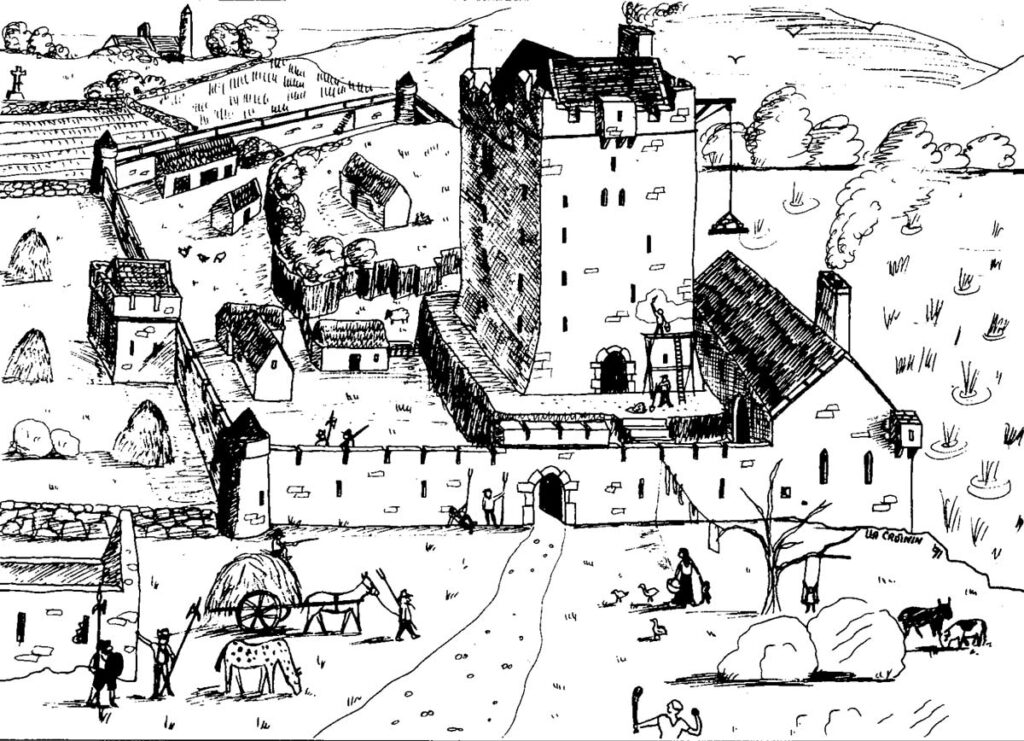
To understand Dysert O’Dea properly, it is useful to look at the wider architectural tradition.
Tower houses became particularly common in Ireland during the fifteenth and sixteenth centuries.
They were built by both Gaelic Irish and Anglo-Norman families.
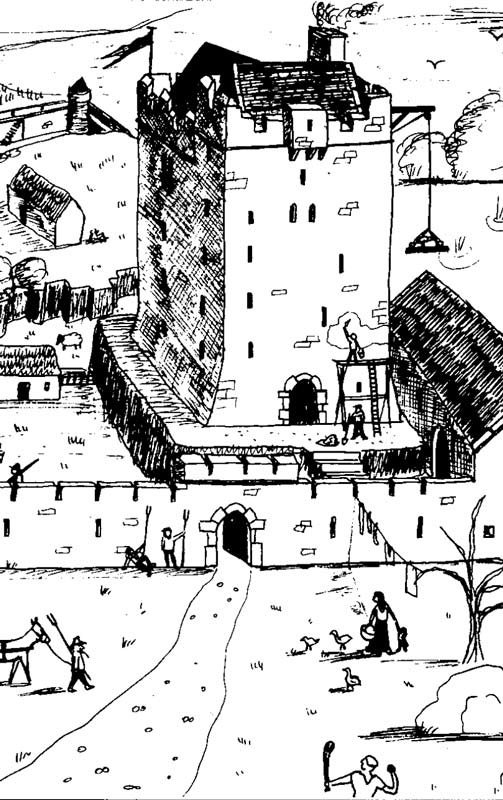
They combined several functions:
-
A fortified residence.
-
A family home.
-
A place of administration.
-
A centre for receiving guests.
-
A secure place for valuables and provisions.
-
A visible expression of wealth and status.
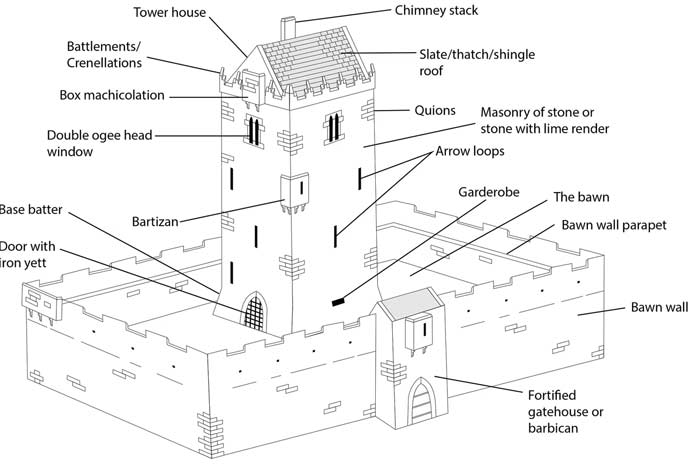
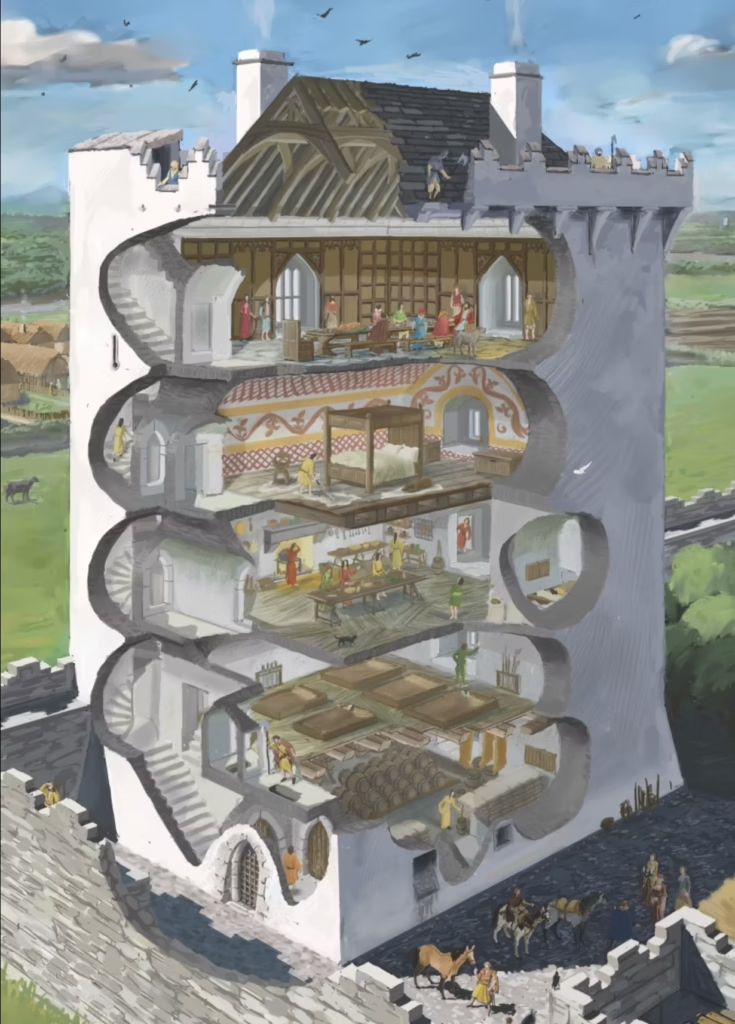
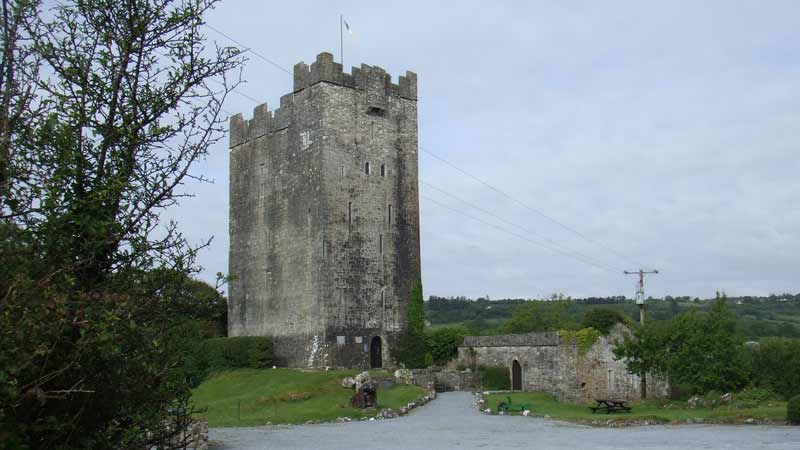
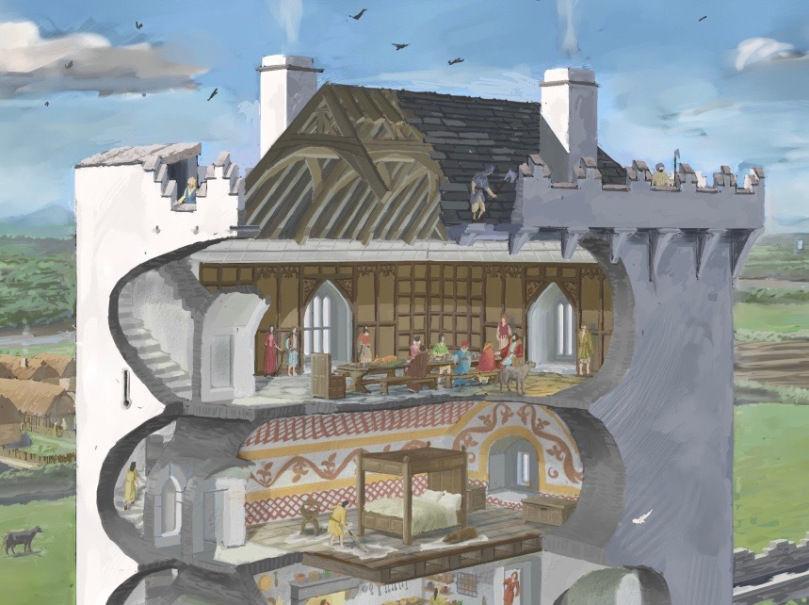
The typical tower house had a relatively small footprint but rose vertically through several storeys.
The ground floor was often used for storage, while the upper floors contained the principal living and reception rooms.
The uppermost chamber was frequently the most prestigious space, with fireplaces, larger windows and better accommodation.
A spiral staircase provided access between the levels, while the roof offered a position for observation and defence.
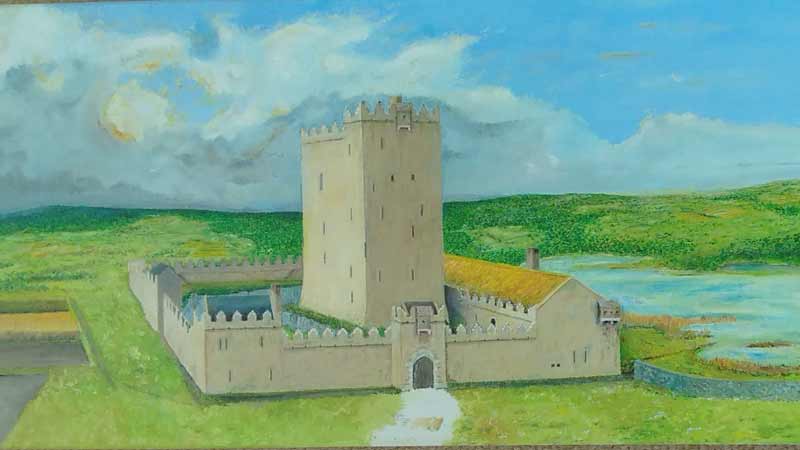
Many tower houses also had an external bawn, providing an enclosed yard for livestock, stores and ancillary buildings.
The household
The lord's household could be quite substantial.
It might include:
-
The lord and his immediate family.
-
Close relatives.
-
Retainers and guards.
-
Domestic servants.
-
Cooks and food preparers.
-
Craftsmen and other workers.
-
Visitors, messengers and allied families.
The castle would have been supported by agricultural activity on the surrounding lands.
Livestock, crops, dairy products and other provisions were essential to maintaining the household.
Food and domestic life
Likely foods included:
The diet of the household would have depended on what could be produced locally and what could be obtained through trade or tribute.
Likely foods included:
-
Beef and pork.
-
Mutton and lamb.
-
Poultry.
-
Fish.
-
Dairy products.
-
Oats and barley.
-
Bread and porridge.
-
Vegetables and herbs.
-
Ale and other drinks.
The discovery of a bakery and butchery evidence at Dysert provides a direct archaeological connection to these domestic activities.
Roundabout Shannon

Hospitality and status
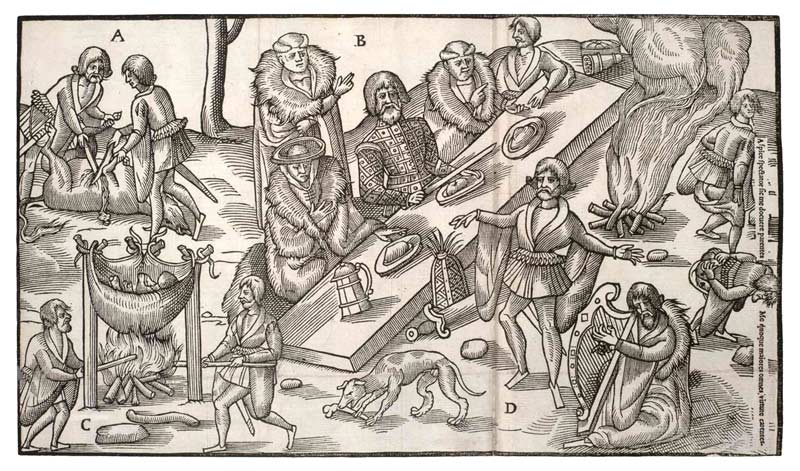
Hospitality was an important part of Gaelic lordship.
A lord was expected to receive guests, provide food and drink, and demonstrate generosity.
The hall was therefore a central space within the castle complex.
The separate banquet hall at Dysert is particularly interesting in this respect. It suggests that the household had facilities for larger gatherings beyond the accommodation provided by the tower itself.
Map