What remains:
|
Feature |
Historical position |
|---|---|
|
Main stone tower |
Survives, restored |
|
Thick limestone walls |
Substantially survive |
|
Vaulted floors |
Important surviving structural evidence |
|
Spiral staircase |
Survives in restored form |
|
Original timber floors |
Largely lost or replaced |
|
Original roof structure |
Damaged and restored |
|
Original doors and fittings |
Much has been lost |
|
Original furniture |
Not preserved as a complete collection |
|
Banquet hall |
Archaeological remains |
|
Bawn wall |
Base/remains identified |
|
Medieval roadway |
Archaeological evidence |
|
Bakery |
Archaeological remains |
|
Associated medieval buildings |
Remains identified |
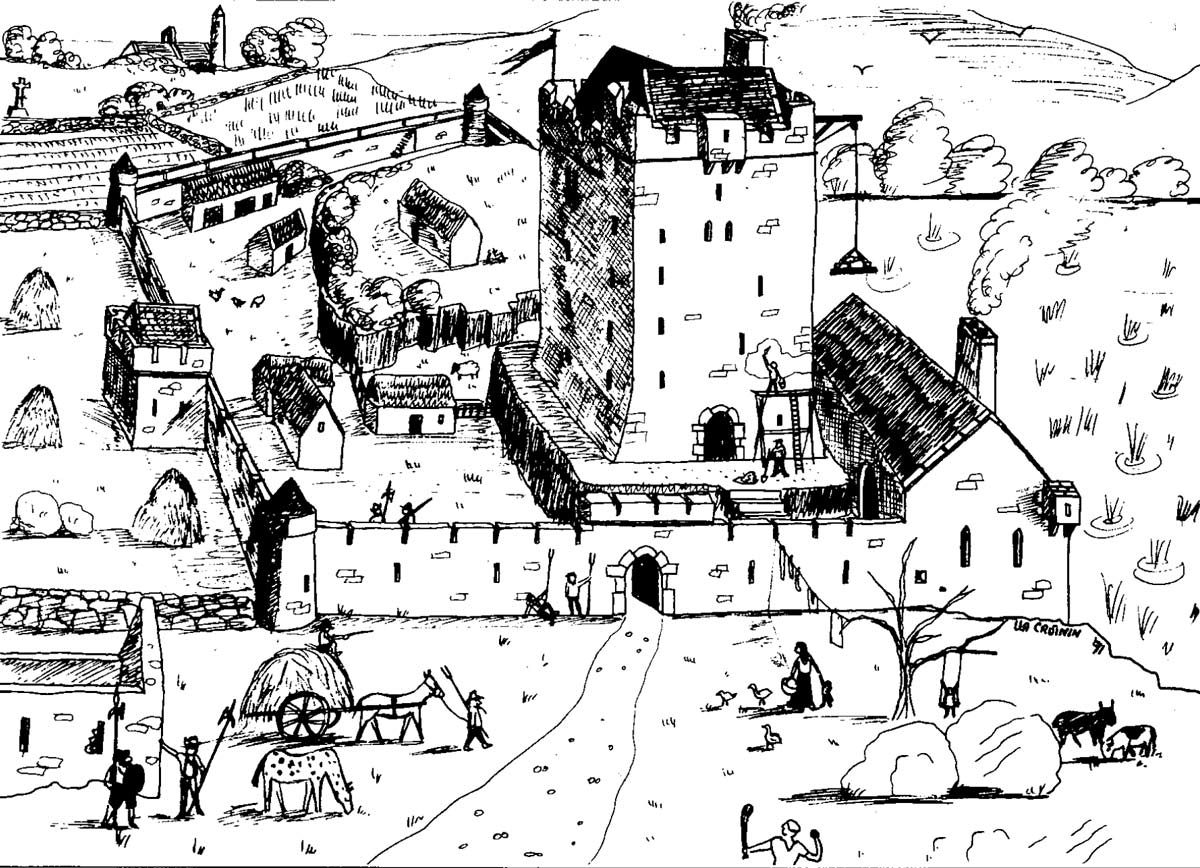
The most important loss is arguably the wider medieval complex.
Today, the tower house is the most visible structure. Originally, however, it was part of an estate containing other buildings, an enclosure, a roadway and facilities for the household.
The banquet hall and bakery are particularly important because they help us understand how the castle functioned as a centre of domestic, social and economic activity.