The church is traditionally associated with St Tola, who founded an early Christian community or hermitage here in the eighth century. He died between 733 and 737. The later Romanesque church and High Cross date principally from the twelfth century.
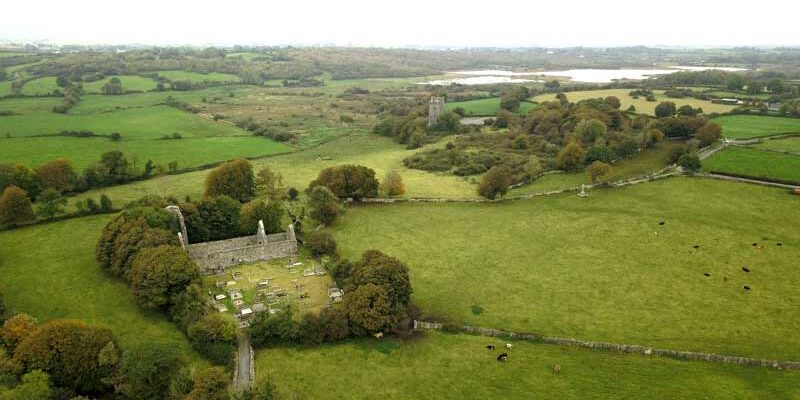
There are several possible reasons for the location.
1. An established centre of authority
The church and monastery had already made Dysert an important place. The O’Deas had longstanding associations with its ecclesiastical lands and administration. Building their principal fortified residence nearby placed their secular power within the same established landscape.
2. Religious prestige and family identity
The church and cross were important symbols of the O’Deas' historic connection with the area. The family could demonstrate its standing through the construction of a substantial residence close to a religious centre with which it had long been associated.
3. A suitable defensive position
The castle was built on a low limestone outcrop. This provided a solid foundation and a naturally elevated position. The stone could also be quarried locally, potentially providing building material while creating the rocky platform on which the castle stands.
4. Control of the surrounding territory
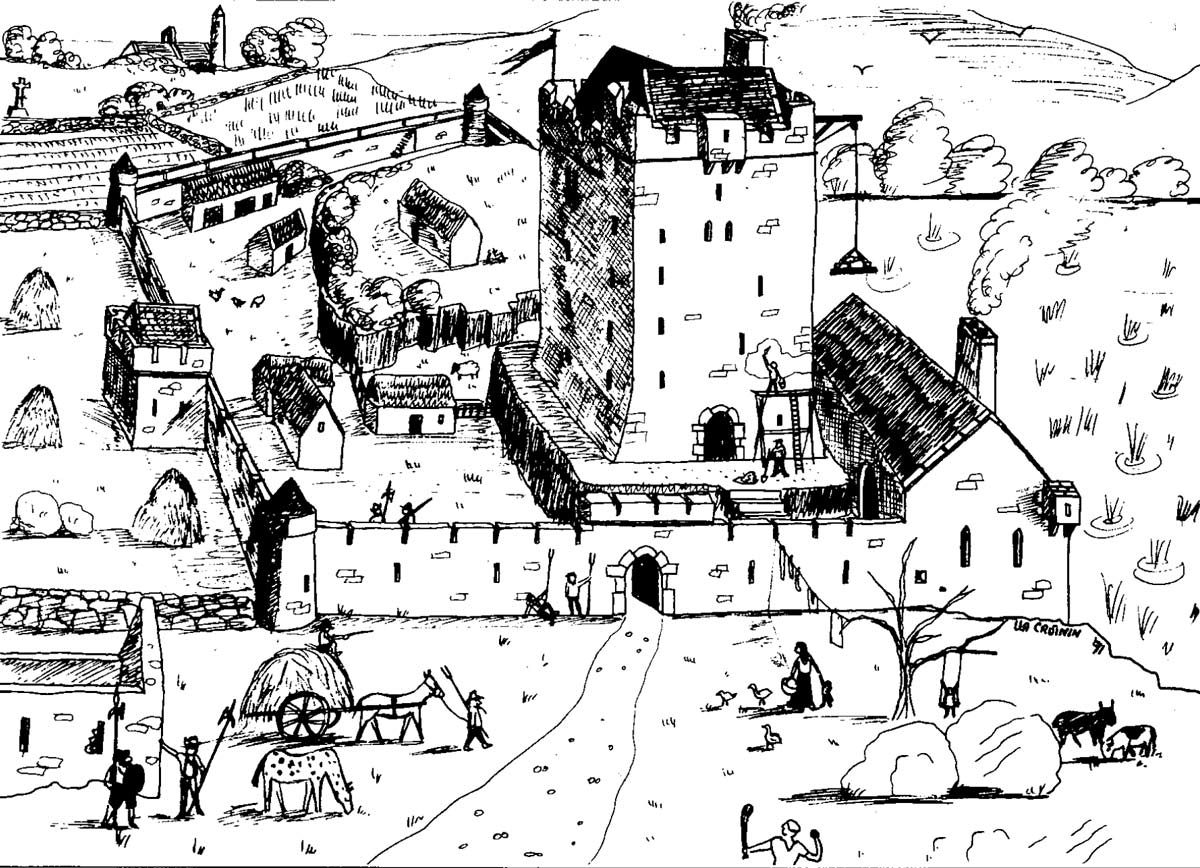
A tower house was not merely a place to live. It was a visible statement of authority. From a prominent position, the O’Deas could oversee their lands, receive visitors, manage their household and provide a fortified place of refuge.
It is reasonable to see the castle and church as complementary expressions of O’Dea authority. However, there is no direct documentary evidence that the church or cross physically dictated the precise location of the castle. The proximity is clear; the precise decision-making behind the site selection remains an interpretation.
The significance of St Tola’s Cross.
It dates from the twelfth century and contains elaborate carved decoration, including Christ and a bishop on its east face.
The cross was repaired by Michael O’Dea in 1683, according to the inscription recorded by James Frost. This is particularly interesting because it demonstrates the family’s continued association with the religious monuments long after the medieval period.