The area also contains evidence of early agricultural and food-processing activity, including fulachtaí fia — prehistoric cooking sites — and other remains of earlier settlement.
The limestone outcrop on which the castle stands was therefore part of an established, inhabited landscape.
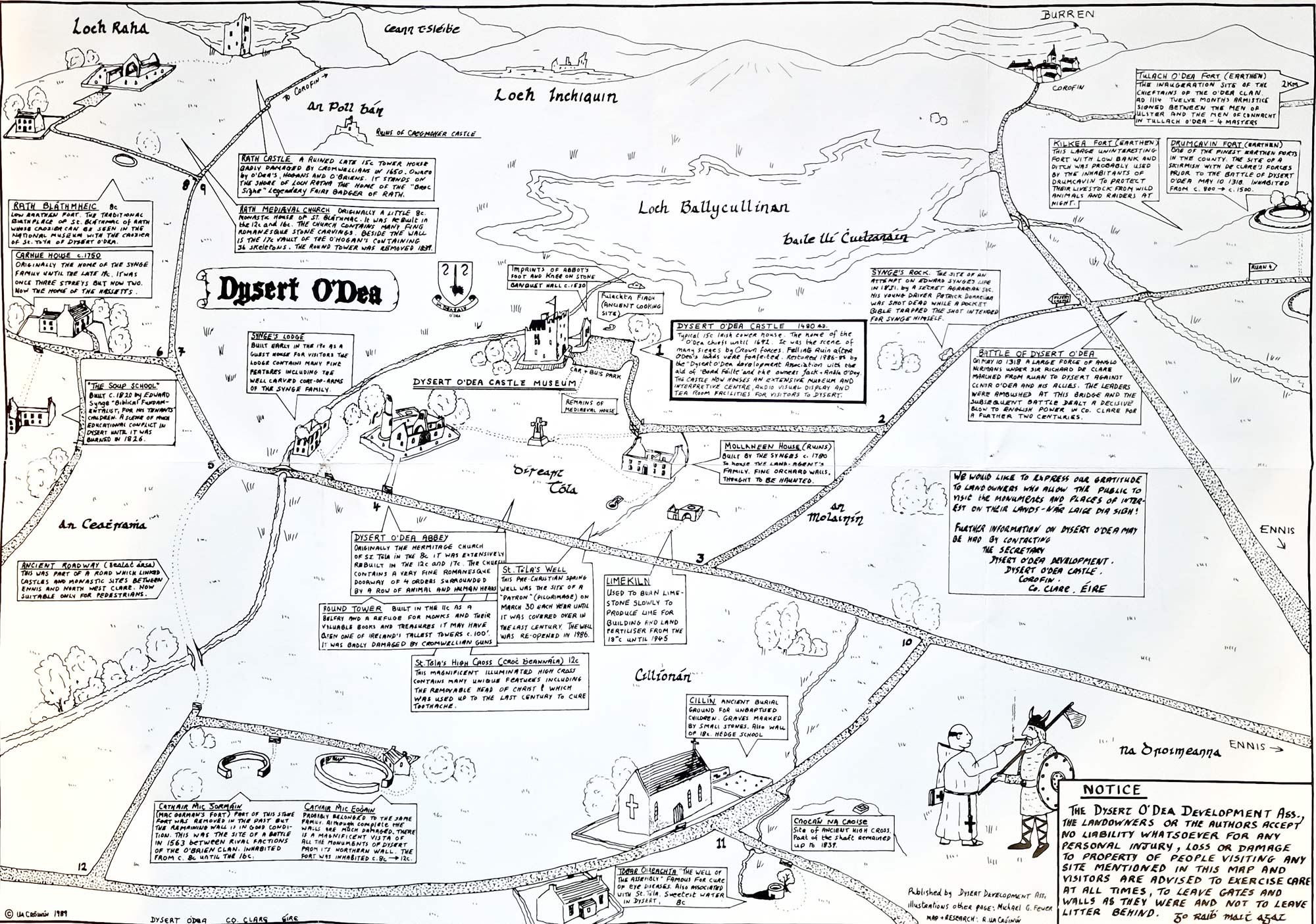
The O’Deas before the tower house
The O’Deas, or Ó Deághaidh, were a prominent Dalcassian family associated with the territory of Cineál Fearmaic, broadly corresponding to much of the later Barony of Inchiquin in north-west Clare. They were part of the wider political world of Thomond, in which the O’Briens held the kingship and leading families exercised authority over particular territories.
Their position was not based solely on military strength. Gaelic lordship involved landholding, kinship, alliances, the administration of local territory and the ability to command the loyalty and service of dependent families.
The O’Deas were also closely associated with the church. Clare County Library records them as a family of hereditary ecclesiastical administrators, or coarbs, responsible for aspects of the administration of church lands and institutions. Members of the family entered the clergy, including Cornelius O’Dea, who became Bishop of Limerick in 1400.
This is important because the O’Deas were not simply a military family who happened to build a castle beside a church. Their authority in Dysert was connected to both secular lordship and an established ecclesiastical tradition.